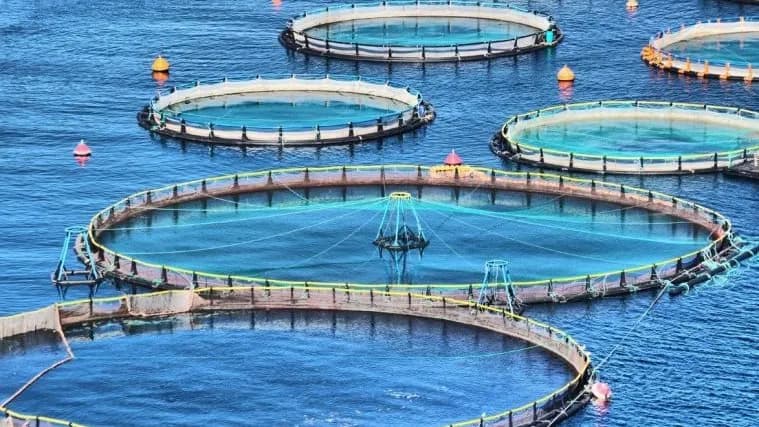
The National Fish Farming Project in Port Said
The project covers 23,000 acres and includes 1,300 operating basins.
The project provides 10,000 job opportunities for young people and reduces the fish gap
President El-Sisi confirmed at the Armed Forces' periodic educational seminar held at Al-Galaa Theater the establishment of the largest fish farm in the Middle East in East Port Said. We present the facts about this major project in the following lines.
Area and production:
The project covers an area of 23,000 acres. It is expected to contribute to increasing Egypt's fish production by 50,000 to 100,000 tons annually.
Fish farming:
Observers confirm that the fish farming project in the canal will work to achieve self-sufficiency for the country in certain types of fish. These include sea bream and sea bass, which are high-value export fish. It will also cover the shortage or food gap that Egypt suffers from in fish protein, similar to other Mediterranean countries.
Estimates indicate that Egypt imports 60% of its fish needs, and with the establishment of fish farming projects around the new canal, it will not only achieve self-sufficiency, but will also be able to export to Europe.
Not only will it achieve self-sufficiency, but it will also allow for exports to Europe.
This is especially true since exportable species will be farmed to meet European consumer demand for fish such as sea bream in Lake Bardawil, as it is unpolluted due to its difference from fresh water, which produces fish that are not acceptable to European consumers.
Estimates also indicate that the fish farming project in the Suez Canal will increase Egypt's protein production. A total of 1,300 fish ponds out of 3,800 have been equipped and filled with salt water. The total area allocated for fish farming is 5,500 acres.
It stretches over an area of 120 kilometers and costs 4 billion pounds.
Lake hatcheries will also be established to supply these farms.


