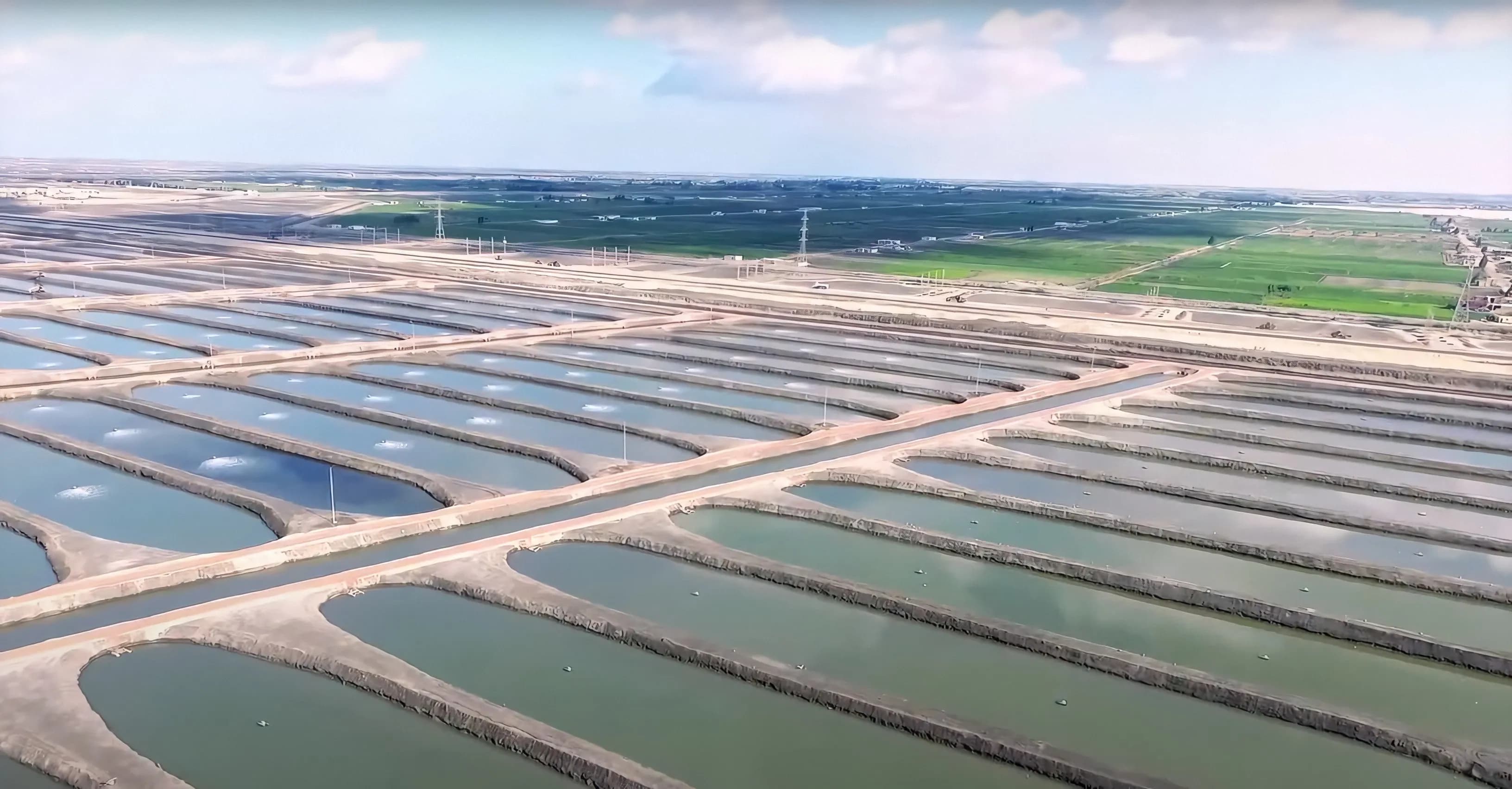
Suez Canal
First: Definition of fish farming
Fish farming is the breeding of various species of fish and marine organisms in artificial or semi-natural environments such as earthen or concrete ponds or marine cages, for the purpose of food production, export, or restocking.
Second: Project location (Suez Canal)
The Suez Canal Authority's fish farming project is located on both banks of the New Suez Canal, particularly in the Ismailia and North Sinai regions, and is one of the largest fish farming projects in the Middle East.
Third: Components of the Suez Canal fish farming project
1. Number and size of ponds
The project includes more than 4,000 fish ponds.
Each pond covers an area of approximately 1.75 acres.
2. Types of ponds
Earthen ponds for semi-intensive farming.
Concrete ponds for intensive farming.
Hatching ponds for breeding fry.
Recirculating aquaculture systems (RAS), which are advanced systems.
3. Other units and facilities
Advanced laboratories for water and soil analysis.
Feed mills specific to the project.
Training and rehabilitation units.
Fish sorting and packaging areas.
Fourth: Species farmed in the Suez Canal
Nile tilapia and red tilapia
Sea bream and sea bass Sea bass
Mullet
Shrimp
Eels
Marine fish farming experiments
Fifth: Economic and environmental benefits of the project.
✅ Economic:
Reducing the fish import bill.
Providing thousands of direct and indirect job opportunities.
Supporting exports to Arab and European markets.
Developing the Suez Canal axis.
✅ Environmental:
Use of calculated and purified water.
Water recycling in some systems.
Close monitoring to prevent pollution of the marine environment.
Sixth: Technology used
Intensive aquaculture systems
Marine cages
Recirculating aquaculture systems (RAS)
Water quality monitoring systems (pH, ammonia, oxygen, etc.)
Automatic feeding and remote monitoring.
Seventh: Supervising and implementing bodies
Suez Canal Authority: the main body.
General Authority for Fish Resources Development.


