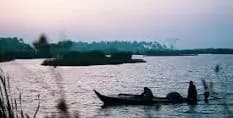
Idku Lake
Location
Lake Edku is located in the Beheira Governorate, northern Egypt, on the Mediterranean coast.
The lake is one of the lakes of the northern coast and the Nile Delta, and is related to the ancient Canopic branch of the Nile (according to some sources).
The Badko Fishermen's Cooperative is located there.
Area and Historical Development of the Water Body
In the 20th century, the area was reported to be approximately 52,000 acres (as you mentioned).
Later, it was suggested that the area had shrunk to approximately 19,000–20,000 acres by the mid-to-late 20th century (e.g., in an environmental document: “approximately 19,000–20,000 acres”).
A more recent study suggests that the area may have shrunk to approximately 14,000–15,000 acres, which is consistent with the previously mentioned figure of “shrinking to approximately 14,000–15,000 acres.”
Some other sources give a different acreage figure.
For example, one news report states that the lake's total area is 31,876.6 acres, divided between open fishing areas, fish farms, and reed beds.
What's important: There's a clear decrease in area due to land reclamation, encroachments, vegetation cover, and sedimentation.
Environmental and Hydrological Characteristics
The lake is connected to the Mediterranean Sea via the Al-Ma'adiya Strait, and receives some brackish (or slightly brackish) water depending on the condition of the strait.
It also receives water from agricultural drainage, industrial wastewater, and domestic wastewater from the surrounding villages, and is part of the Nile Delta. The lake discharges water from agricultural drainage canals—see document:The water consists of approximately 90% agricultural drainage + 10% seawater via the strait.
The lake's depth was very low at times (less than one meter in some areas) due to sediment and vegetation accumulation and limited water drainage.
The lake is connected to the Mediterranean Sea via a passage called the "Bougaz El-Maadia" or "El-Maadia" strait. This passage allows seawater to enter or exit depending on the tides and hydraulic pressure.
For example, one report states that the lake receives approximately 1.738 billion cubic meters of wastewater annually.
Regarding salinity:Due to increased freshwater and wastewater discharge, the lake's salinity has decreased to the point where it is now brackish or even less saline than marine conditions.
Furthermore, the lake suffers from siltation and the growth of aquatic weeds (reeds, river hyacinth, and submerged plants), which reduces its actual depth and restricts water movement and renewal.
Environment and Biological Status
The lake is classified as an ecosystem vulnerable to environmental degradation due to intensive human impacts: encroachment, drainage, and pollution.Dense aquatic vegetation such as reeds (Phragmites australis), river hyacinth, and water hyacinth (Eichhornia crassipes) grow in very shallow areas.


