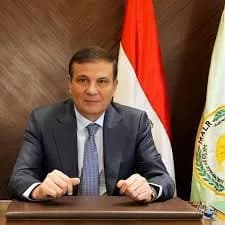
Egypt's vision for developing the natural fisheries and aquaculture sectors
On the sidelines of the United Nations Ocean Conference held in France, from June 9 to 13, 2025. ● The Minister of Agriculture presents Egypt's vision for developing the fisheries and aquaculture sectors
Minister of Agriculture: Egypt has adopted a long-term vision to achieve a balance between the sustainability of marine resources, food security, and socio-economic development.
● Farouk: Egypt has adopted modern and environmentally friendly technologies, supported small farmers, and integrated aquaculture activities into value chains.
Statement issued by the Ministry of Agriculture and Land Reclamation:
Alaa Farouk, Minister of Agriculture and Land Reclamation, reviewed Egypt's vision for developing the natural fisheries and aquaculture sectors, as well as the efforts undertaken by the Egyptian state to advance this sector in a way that achieves food security.
This came during his speech at the ministerial session held on the sidelines of the United Nations Ocean Conference, which took place in Nice, France. A number of ministers and representatives of international and regional unions and organizations participated in the session.
Farouk pointed to the importance of this important conference concerned with the sustainability of marine and ocean resources, as well as his participation in the dialogue platform on transforming fisheries and aquaculture in the Mediterranean and Black Seas.
The Minister of Agriculture explained that Egypt has taken concrete and serious steps to address the growing challenges facing the fisheries and aquaculture sectors. It has adopted a long-term vision aimed at achieving a balance between the sustainability of marine resources, food security, and socio-economic development, recognizing the vital role this sector plays in strengthening national resilience.
Farouk emphasized that fisheries are a cornerstone of Egypt's food security system, serving as a primary source of animal protein for millions of citizens and contributing significantly to dietary diversity. This sector is also a primary source of income for a large segment of the population, particularly in rural and coastal communities. He noted that Egypt has implemented a comprehensive, long-term plan for the sustainable management of natural fisheries, which includes developing monitoring and evaluation systems, applying ecosystem-based management principles, combating overfishing, and expanding marine protected areas. The Minister explained that these efforts aim to replenish fish stocks, ensure the continuity of production, and maintain the health of ecosystems. Egypt also seeks to develop this sector through integrated coastal zone management, promoting climate-resilient aquaculture systems, developing value chains that create job opportunities, particularly in rural communities, strengthening institutional capacities, improving data collection, and encouraging effective community participation.
He stated that the Egyptian government places great importance on the smart and sustainable expansion of aquaculture by adopting modern and environmentally friendly technologies, supporting small-scale farmers, and integrating aquaculture activities into broader value chains. He noted that Egypt has recently established several fish farms, such as the Ghalioun farm and the Fayrouz project, to help address the shrimp production deficit, in addition to raising marine fish species to support marine cage farming projects.


