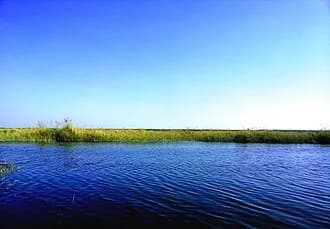
Proposals for the promotion of fishery in Lake Merwet
J3 of the list of BIWF
1. There is a need to provide a place for fishing workshops to sell Lake Merit production, and to work towards the establishment of an ice plant to provide fishermen with their needs to keep fish from being damaged, while equipping the necessary seeds to help fishermen and provide anchors to their boats, establishing laws and legislation that limit fishing in the lake without licences, and providing machinery and equipment for fishermen at distinct prices by the bodies concerned.
2. Reduction of water surface pollution, strict implementation of fishing laws and protection of the environment, in order to develop the productive capacities of natural surfaces and protect water surfaces from the mining of other activities, while achieving integrated coastal zone management.
Three. Building and updating information bases for planning and preparing development projects, with the development of systems and mechanisms for the management of natural sources, and the revision and amendment of the Fishing Act No. 142 of 1983 for inconsistent with local and international variables in this sector.
4. Improving the quality of the fish product from its different sources to conform to international requirements, requires reducing or preventing the dumping of pollutants in the lake, the clearance, opening and maintenance of the boggs, thus increasing the productivity of the lake on the one hand and improving the quality of the product on the other.
5. Sustainable development of production through the provision of the potential and credits necessary to clean the lake out of grass, with effective performance coordination mechanisms between ministries, beach-related actors and water surfaces, to achieve integrated and rational management of water surfaces and natural fisheries.
6. Development and restructuring of the General Authority for the Development of Fish Stocks to enable it to fulfil its responsibilities in controlling the quality of fish products and following up on the implementation of laws, with the necessary legislative amendments to reach fishing in the Mediterranean into the international economic zone, which extends to some 200 nautical miles instead of 12 nautical miles, namely the current territorial waters.
7. Undertake a study of the external demand of fish-importing States, increase the production of required species commensurate with the needs of each State, enhance government interest in increasing investment in the fish production sector, exploit natural resources such as Lake Nasser and develop fish farming projects along the new Suez Canal and elsewhere, with a view to raising self-sufficiency in fish production.
8. Development and development of fish production through coordination between scientific and research institutions, oversight of the quality of fish products by the General Fisheries Development Authority and monitoring of the implementation of laws, design and implementation of demonstration programmes and projects in the areas of history and fisheries, using high-productivity short-lived and more environmentally friendly species.
9. Establishment of several marine excavators to disperse salt fish with high economic returns, facilitating seafarers ' licence procedures by the Lakes Protection and Development Authority, providing financial loans to farmers to enable them to purchase feeds and production requirements, encouraging farm owners to cultivate mixers to benefit from the water column and raising the economic return of farms.
10. The trend towards expansion of fish farming and the production of species needed by Egyptian consumers to contribute to the achievement of the objectives of the State in bridging the food gap, providing direct and indirect employment, reducing imports of fish and exporting surplus production from domestic market consumption to world markets, providing hard currency and supporting the Egyptian economy.
11. Expansion of national fisheries projects, which account for about 74 per cent of Egypt ' s total fish production, work to develop and develop fish excavations and increase farm space, with interest in fish farming within current water sources, expand intensive farming and fish cages using modern technologies to maximize access to water resources, increase productivity and reduce the cost of fish production requirements.
12. Provision of modern equipment, fishing methods, transport, processing and packaging, and an increase in the number of fish products on which processing industries are conducted with health specifications and conform to international requirements, making them able to compete with and reduce dependence on the imported product.
13. Organization of guidance symposia to raise farmers ' awareness of optimum methods of nutrition by type of fish and age (nutrition strategies) and best practices at all stages of cultivation, beginning with basin processing and water quality to harvest, in collaboration with various scientific bodies in Egypt and the International Fish Centre.
14. An increase in both the amount of production of excavations and the area of fish farms has shown to increase agricultural production by 0.66 per cent, and the depreciation of cultivation results in increased agricultural production by 0.43 per cent; therefore, the development and development of fish excavations and the expansion of farm space, with interest in fish farming in current water sources, the expansion of intensive cultivation and fish cages using modern technology to maximize productivity.
15. Attention must be paid to the development and upgrading of natural fisheries and the removal of constraints limiting fish production, with no more than 26 per cent of Egypt ' s fish production, although it extends to some 13.5 million acres. Increasing the number of fishing licences granted to fishers, increasing the number of motorized fishing boats, protecting fishers from the exploitation of wholesale traders, and providing equipped transportation for the quality of fish. Studies have shown that the number of fishermen and natural catchers is growing by 0.15%.
16. Work on the provision of quotas and fingers in appropriate quantities and times through the establishment of fish mattresses to provide zigzah in the region and the use of oxygen-based transport to reduce losses during transport and production, while increasing the efficiency of cooperative organizations to provide production supplies at appropriate prices that encourage investment, intensify production and increase productivity.
17. To pay attention to financing and supporting investments in this vital sector by facilitating concessional loans, encouraging investment in stockpiling and refrigeration of fish markets, particularly in cases of increased supply, lower prices and trade control, as well as providing other production requirements with appropriate windows and equipment, improving irrigation and drainage systems for land-based fish farms through grazing and disinfection, establishing farm drainage banks and sewage and agricultural treatment.
18. The results of the studies showed that fish output fluctuated significantly, resulting in a decline in investment, which called for a move towards and increased investment in fish farming, with attention to fish farms and protection from infringements, demolitions and waste dumping, and laws criminalizing the causes of their productivity deterioration and reviewing existing laws governing it.
19. Reduce poaching that eliminates cultivation and small-scale fish and limits fish development, so poaching must be controlled because it prevents the full growth of fish and harms farming, leading to a deterioration of productivity and disruption of environmental balance in lakes.
20. Work on the dissemination of the Bassa fish farming throughout the Republic for its benefits, which is rich in Omega-3 that is beneficial to public health and reduce cardiovascular diseases, and is a source of high-quality protein, of which 126 grams contain about 22.5 grams of full protein, which are also suitable for diet programmes to contain only 160 calories per 126 grams.
21. Fish farming should be an integrated activity, as sewage from fish basins contains high levels of ammonia and beneficial traces of agricultural crop irrigation within the integrated agriculture system.
22. Promote and implement sustainable fishing practices, avoid unfair and irregular fishing, conserve marine habitats, invest in renewable marine energy up to 800 metres, reduce reliance on fossil fuels, invest in advanced fishing technology to reach up to 600 metres, invest in research, technology and maritime innovation to support the blue economy, as well as develop fishing ports and landing sites, especially in seas and oceans.
23. Develop and support sustainable tourism that reduces the impact on the environment and preserves natural resources, reduce marine pollution through the implementation of policies, laws and regulations governing this, and strengthen the governance and management of marine resources to ensure sustainable economic growth.
24. The need to use scientific methods to rationalize the transfer of local fish production between the governorates, in order to achieve lower cost and time for transport, reduce losses during deliberation and improve the quality of fish, thereby providing them with appropriate quality and prices; to that end, the proposed inter-prefecture transport and distribution system must be implemented under the smart transport system and the development of the modern road network established by the State.
25. Provide accurate data on all logistic activities related to the transport and storage of fish, including the use rates of different modes of transport (surface, river and rail) and transport costs by means, to carry out accurate economic studies that help to modify transport and distribution policies.
26. Statistical methods and operational research methods are used in studies on fish transport and storage logistics, with a view to achieving affordable and low-cost provision of these goods to citizens.
27. Provide production requirements through cooperatives, with their assets collected at the end of the production season, increasing the profits of producers and protecting them from the exploitation of traders, while opening fish marketing outlets through cooperatives for the benefit of producers and consumers.
28. Through its branches throughout the Republic, cooperatives can examine the total demand of the market and the needs of each region, thereby redistributing production accordingly.
29. Establishment of plants for the manufacture, navigation and processing of certain fish species in a healthy and safe manner, to add value to them, then to sell them to consumers through cooperative sales outlets, and to establish a central market with high specifications that take into account health aspects and good supply methods to attract consumers.
30. Given that fish are a quick-destructive commodity and that producers have no direct access to consumers, retailers use this to generate high profits, requiring cooperatives to participate in the marketing of fish through the opening of direct sales outlets and the provision of equipped cars to transport fish from production places to sales points.
31. The need to provide modern equipment, fishing methods, transport, processing and packaging, and to increase the number of fish products subject to processing industries according to international health specifications to compete for imported products and reduce their import.
32. Organization of guidance symposia to raise farmers ' awareness of optimal diet methods by type of fish and age, and best practices at all stages of agriculture in cooperation with scientific bodies and the International Fish Centre.
33. Activate the role of fish extension in developing the awareness of fish farm holders regarding the application of biosecurity measures at different stages of production through appropriate extension activities.
34. Strengthen control over the implementation of the Fishing Act and the fight against illegal fishing activities to preserve and prevent the depletion of fish stocks, particularly in the central delta and Nile Valley areas, while intensifying efforts to improve the management and protection of fish sources in the Nile River under future challenges such as climate change, pollution and human mining.
35. Work to rationalize the import of expensive fish stocks such as crusts and mollustaches to reduce trade deficits and reduce demand for hard currency, while expanding the list of importing States to reduce risks and increase food security.
36. Concentration of fish importation during February to June, as well as December, where import prices fall during this period, with the export of high-priced fish items such as crustaceans and brothels expanding.
37. Make efforts to maintain current import markets for fish from Egypt and work to open new markets to increase Egyptian exports, in order to avoid the vulnerability of foreign exchange earnings to any economic or political changes in importing States.
38. The concentration of fish exports during the months of April to September, with prices rising during that period according to the seasonal index of Egyptian fish exports.
39. The closure of any plant that produces damaged or dumped in watercourses without the required treatment, the establishment of environmental monitoring stations to monitor and address negative environmental changes in a timely manner, and the obligation of all factories and institutions to treat wastewater and residues before they are dumped in the Nile or Lakes River.
40. Use of applications that achieve additional fish production from the water used, including land use under restoration in fish farming (project 1.5 million acres), integrated fish farming, agricultural crops and livestock production using groundwater (integrated code) and indoor fish farming.