Water Use Policies in Egypt: Problems and Possible Solutions – Part 2
The second part of water use policies in Egypt: problems and possible solutions
The Most Important Issues of Water Uses: 1- The Issue of Sustainable Development and Water Resources:
The international community adopted the term sustainable development at the Earth Summit in Brazil in 1992, meaning meeting the needs of the present generation without compromising the rights of future generations to live at a standard of living no less than the one we enjoy today. The international community defined the components of sustainable development as: economic growth, social development, and the protection of the environment and its natural resources. This means that a comprehensive approach must be taken when preparing sustainable development strategies, carefully considering these three dimensions.One of the important steps in preparing and implementing a sustainable development strategy is identifying priority challenges. The following is a preliminary list of challenges as identified by stakeholders representing institutions concerned with water. This list should be reviewed and updated during the detailed preparation of the water use strategy:
(A) Limited water resources under increasing water demand driven by sustainable development requirements, including land reclamation expansion, rapid industrial development, and rising living standards. This is in addition to the increasing deterioration of water quality due to the lack of alignment between development rates and available resources, as well as weak water environmental protection measures.
(B) Increasing demand for water in the drinking water and domestic use sector, as well as in the industrial sector, due to population growth and industrial expansion.
(C) Groundwater pollution caused by deficiencies in sewage networks and the discharge into waterways that feed the aquifer.
(D) Depletion of the aquifer and increased seawater intrusion.
(E) Low quality of agricultural, domestic, and industrial wastewater, making it unsuitable for reuse in irrigating food crops.
(F) Pollution of the Nile River due to industrial and agricultural drainage along its course, resulting from the discharge of untreated waste into public drains.
(G) Deterioration of water quality in the northern lakes.
(H) The necessity of implementing decentralization in water resources management.
From the above, it is clear that one of the main concerns of sustainable development is the preservation of natural and environmental resources for future generations. This is achieved by finding economically sustainable solutions to reduce resource consumption, stop pollution, and conserve natural resources, most importantly water.
And now, after diagnosing the issue at hand… the following has been agreed upon:
The necessity of considering water security and food security issues as matters of national security.
The relationship between Egypt’s position as a downstream country, its geography, population size, and arid climate, and the impact of these factors on water issues and food security.
The importance of integrated development and the role of the state, the private sector, and civil society.
Issues of water monopoly, water banks, and water trading markets.
The increasing food gap amid climate changes and rising drought rates, which threaten the availability of water for crops.
Identifying ways to enhance available water resources to address the water gap.
Paying attention to water quality in addition to quantity.
Exploring ways to address water-related terrorism issues—for example, the seizure of dams.
Identifying mechanisms to improve the utilization of groundwater resources, which face many problems, including:
Increased losses due to evaporation and seepage into the soil.
The absence of an agricultural drainage system, with drainage occurring in artificial ponds located at a higher level than the farmland (as is the case in Al-Kharga, Al-Dakhla, and Farafra), which poses risks. For example, when the bridge over Birkat Mout in the Dakhla Oasis collapsed, large areas of farmland and some structures in the village of Hindaw were flooded.
Soil salinization due to water evaporation and salt deposition, and the rise of groundwater under high piezometric pressure in wells in the Al-Qifar area in the eastern part of the Qara Umm Al-Saghir Oasis in the Qattara Depression, which formed a large freshwater lake.
Working on developing a strategy to utilize water resources from rain and flash floods in the development of national water resources by building dams to slow surface flood flow, allowing sufficient time for a large portion of surface water to infiltrate the soil and recharge the groundwater, and constructing underground reservoirs (cisterns) to collect the water.
Integrated management of water resources to achieve increased crop density.
Preventing water withdrawal.
Increasing the per capita benefit from water use.
Flexibility in the crop structure from a long-term perspective.
Cooperation in tropical lake reservoirs through agreements.
Addressing the negative impacts of previously implemented large-scale projects.
2- The Issue of National Projects, Land Reclamation, and the Sustainability of the Groundwater Needed (The “One Million Feddan” Project)
The agricultural development project over an area of four million feddans faces many challenges, the most important of which are:
Groundwater in the desert is the only resource for all uses. It must be considered as a renewable resource that is subject to various expected climate changes, which affect water, land, and crop usage. In addition, the quality of groundwater in the proposed areas (classified as fresh, brackish, or saline) is a key factor that determines its suitability for crop cultivation and the irrigation amounts needed, which increase with higher salinity levels.
The high cost of the project (well drilling and water lifting, lack of traditional energy sources, infrastructure, and services) requires careful determination of the type and nature of exploitation and the financing methods needed for implementation, operation, maintenance, replacement, and renewal.
The necessity of establishing new, integrated, and sustainable communities, otherwise there is a risk of reverse migration from these communities back to the valleys and delta after the population has grown significantly.
Regarding institutional challenges, responsibility for project implementation is scattered among many ministries and agencies, with a lack of coordination and unclear timelines for carrying out the developmental activities associated with the project before, during, and after the development of water resources.
In addition, there is the challenge of weak capacities and insufficient numbers of companies working in land reclamation projects or in drilling and preparing the large number of wells required (expected to be 5,000 wells per year).
And now, after diagnosing the issue at hand, the following has been agreed upon:
Accelerate the identification of the institutional entity responsible for planning, managing, and implementing the project independently, while the responsibility for execution lies with the relevant government and private sector bodies, according to a sovereign Master Plan set by the state.
Ensure the project achieves integrated development, including agricultural and non-agricultural activities (industrial, artisanal, mining, tourism, and commercial), utilizing natural resources (land, water, minerals, climate, population) and taking advantage of the relative geographical location to maximize economic returns despite the high cost of development in these areas, while ensuring competitiveness and sustainability even if water resources decline or are depleted in the future.
Provide the necessary infrastructure, including roads, housing, electricity, fuel networks, and services such as education, health, supply, civil registries, media, and external transport and communication arteries, to attract populations and achieve social stability.
Move away from traditional agricultural development patterns and adopt cropping patterns and agricultural systems suited to the quantity and quality of available water, leveraging the relative advantages of the location and climate, achieving high financial returns while avoiding high-water-consuming crops regardless of their monetary value.
The economic return per unit of water in projects and agricultural products must be calculated.
Establish a clear, declared policy that no projects using water should be announced or implemented without conducting an economic feasibility study, including the cost and return per unit of water, to be reviewed by the Ministry of Planning.
Provide a study on the costs of managing, operating, and maintaining water resources, updated periodically, to provide economic analysts with the information needed to carry out comprehensive feasibility studies of national projects using water.
The value of state subsidies must be known and declared, specifying whether the support is absolute or to be gradually phased out over a defined period.
Avoid fragmenting agricultural land into small holdings that cannot bear development costs or achieve economic returns sufficient to compete and remain sustainable. If allocating land to small farmers or youth, it should be through new collective models providing technical, financial, and marketing capabilities and necessary inputs to succeed and compete with large commercial farms.
Study the size and depth of groundwater reserves and determine optimal exploitation methods to set withdrawal rates for different usage scenarios and conduct pilot applications to ensure the accuracy of information on aquifer characteristics and the consequences of withdrawals before scaling up implementation.
Consider the specificity of each site in planning and implementation based on available resources and the development costs required to utilize, manage, and maintain these resources.
Choose investment and financing models that encourage private sector participation in integrated, multi-purpose development (agricultural and non-agricultural) and regulate investment in remote desert areas outside government funding.
Review laws and regulations governing groundwater withdrawal and exploitation to ensure compliance with necessary safeguards and impose stricter penalties on violators.
Rely on new and renewable energy in groundwater pumping and agricultural, urban, housing, and industrial development (solar energy, wind energy), which must be initiated before expanding the project implementation.
Expand the use of advanced technologies for water and energy utilization in agriculture, industry, and domestic purposes, including well operation control, monitoring, and follow-up.
Focus on training and human development aligned with the economic, social, and environmental needs of the project areas.
Present the overall project plan and implementation schedule for community dialogue to gather opinions and contributions for funding.
Begin implementation in two or three areas as pilot models that fulfill all success criteria, then expand based on lessons learned and successful experiences.
3- The Issue of Crop Patterns and the Mismatch Between Water Supply and Actual Demand
Based on the crop patterns provided by the Ministry of Agriculture, the water demand for irrigation is calculated by the Ministry of Water Resources and Irrigation, which in turn determines the quantities and timing of water releases (water supply).
However, it should be noted that the Ministry of Agriculture records a general crop pattern for planted areas, including only the main crops (corn, wheat, clover, cotton), and provides approximate records for other crops. Additionally, the compulsory farming system has led to farmers being given inaccurate data about their actual crop patterns. Such incorrect data causes significant differences between the water needs of the crops actually planted and those calculated based on the provided data. The data submitted to the Ministry of Irrigation also assumes that planting and harvesting dates are uniform across different production areas.
The differences between water supply and demand arise due to the variation between officially estimated crop patterns and planting/harvest schedules versus actual conditions on the ground. If supply patterns could be made more compatible with demand patterns, this would reduce total water flow and decrease losses from excess supply. This is likely to be effective only if farmers are involved in determining agricultural water needs.
Currently, since there is no mandatory crop pattern, estimating the water requirements for actual crops and releasing the appropriate amounts of water has become more difficult.
And now, after diagnosing the issue at hand, the following has been agreed upon:
It is necessary to link crop patterns with the water quotas used between the Ministry of Irrigation and the Ministry of Agriculture.
Study and determine the optimal crop pattern for reclaimed lands.
Study and determine the crop pattern that ensures safe food production levels.
Study and determine the crop pattern that balances production with production requirements.
Study and determine the crop pattern aimed at producing export crops in which Egypt has a comparative advantage, increasing export competitiveness.
Study and determine the crop pattern that achieves efficient and economical use of natural resources, including land, water, energy, and climate.
Develop the role of the Agricultural Credit Bank in supporting the crop pattern.
Study and establish suitable mechanisms for crop insurance against disasters.
Study and define the role of the private sector and civil society in designing and implementing policies related to crop patterns.
Study and determine the crop pattern and agricultural cycle (whether it reflects reality, is acceptable, or serves as a standard).
Gradually shift from traditional crops with relatively low returns to high-cash-yield crops such as fruits, vegetables, and industrial crops, within the framework of successful marketing policies.
Successful implementation of a guided crop pattern and achieving its goals requires integration among services provided to farmers, including agricultural extension, cooperatives, the Agricultural Credit Bank, and marketing services.
Eliminate crop fragmentation.
Crop patterns must consider the following:
Integration among the production sectors in the country.
Balance between the state’s interest and the farmer’s interest.
Balance between profitability and return per unit of water.
Increase net returns from crops and maximize returns per unit of land or water.
Reduce production costs, especially energy costs.
Reduce water consumption and the area planted with high-water-demand crops such as rice, sugarcane, clover, and bananas.
Reduce crop residence time in the field and enable seasonal crops to be combined with permanent crops.
Characteristics of each production area and suitability of crops to various environmental conditions.
Crop suitability for mechanization, agro-processing, transport, marketing, and storage.
Crop suitability for the local market and consumption patterns.
The state’s policy to reduce subsidies for production inputs and decline in technical support (extension and guidance).
Combat the illegal pesticide trade, which exposes farmers to adulterated and untested pesticides registered with the Ministry of Agriculture, causing harm to users and potentially consumers without real increases in crop production.
Identify farmers’ opinions on the proposed crop pattern, understand production challenges and how to resolve them, and convince them to plant areas according to the proposed pattern while maintaining relative prices that achieve both farmers’ and state objectives. Agricultural extension services should communicate applied research results to farmers, introduce superior varieties, and guide agricultural practices to increase productivity and benefits.
Identify exporters’ opinions on the crop pattern and their willingness to implement contract farming with farmers to ensure marketing of crops. The state should also use pricing policies to incentivize farmers to follow the proposed crop pattern, including guarantee prices and announcing prices for some crops to encourage expansion in the recommended areas, as prices guide the use of economic resources.
4- The Issue of Irrigation Technology Development and the Irrigation Development Project:
The importance of improving the efficiency of irrigation systems and technologies lies in their role in enhancing water use at the farm and field level, conserving freshwater by reducing losses at the farm level, achieving fair distribution of irrigation water, lowering irrigation costs, increasing agricultural productivity, encouraging water users’ participation in operation, maintenance, and management of irrigation systems, and shifting the burden of operation and maintenance from the government to water users.
The significance of this issue is highlighted by the following considerations:
Increased water demand from non-agricultural sectors will come at the expense of the agricultural sector if a water shortage occurs.
Ensuring the continuity, quality, and integration of groundwater use policies in light of expansions and national projects.
The development of irrigation systems, given the limited financial capacity of farmers, is a responsibility of the state.
And now, after diagnosing the issue at hand, the following has been agreed upon regarding irrigation development:
Review and update drainage methods.
Develop irrigation and drainage technologies for agricultural, industrial, and sanitary uses. Install water meters at the head of each field to measure actual water use; this requires modifying how water reaches the field. This proposal can be successfully applied in large farms and major agricultural projects managed by the private sector, as well as in consolidated small holdings for single crops (e.g., cotton).
For improving irrigation in old lands, rely on center-pivot irrigation; for drip irrigation, if a salt cone forms around the plant stem, it can be removed either by periodically loosening the soil or manually collecting salt deposits with a scraper (similar to a large spoon).
Financial and non-financial incentives that the state can use to encourage farmers to improve irrigation systems, along with the importance of adopting a state-backed incentive program.
Financial and non-financial incentives that can be used to encourage manufacturers to reuse industrial water within their processes as a conservation measure.
Training mechanisms for labor in modern irrigation system use and maintenance.
Practical methods applied in Egypt on a limited scale, such as laser land leveling to achieve the proper slope, which can save 15–20% of crop water needs.
Changing crop patterns in certain crops to achieve efficient and economic irrigation, such as dry-method alfalfa cultivation instead of the flooded method, saving 330–420 m³ per feddan. Shifting from line planting to ridge planting with the same plant density can save about 20% of water requirements.
Use of alternate furrow irrigation: irrigate half the lines while the other half receives water through infiltration, which can save around 20% of water needs.
Improving field irrigation efficiency by controlling irrigation gates, lining water inlets, adopting nighttime irrigation, and leveling the land can save 15–20% of water.
Disseminate short-duration rice varieties across large areas (up to 2 million feddans), which can reduce the water quota from 7000 m³ to about 4500 m³ per feddan, saving roughly 2500 m³ per feddan.
Use modern irrigation methods (drip and sprinkler) instead of surface/flood irrigation, especially in new lands with high permeability, to save significant water in crop production.
Lining canals and using modern methods to transport and distribute water in the field, such as pipelines, siphons, and irrigation by strips or pulses, can increase irrigation efficiency and reduce water loss.
The government must safeguard farmers’ interests by providing production inputs (seeds, fertilizers, pesticides, mechanization) and supervising their quality and pricing. Supplying inputs of approved quality, in adequate quantities, at the right time and place will improve productivity.
Provide mechanization for land preparation, planting, and harvesting to increase yield and profit, thereby increasing return per unit of water. For example, currently, the use of approved seeds is below 30% for wheat, about 1% for alfalfa, less than 25% for rice, below 13% for beans, and about 15% for onions; these rates could increase to 50% within two years.
Address fertilizer shortages and high prices, especially in the summer season, caused by companies exporting most of their production for profit without considering domestic agriculture. The government can regulate this with public-sector and free-zone companies.
Update irrigation methods and convert surface irrigation to drip or sprinkler irrigation, particularly in the Delta. This project requires significant investments, and even if funding is arranged, implementation will need consolidated farm areas. Farmers may resist cooperating in shared areas or regular maintenance. The efficiency of drip irrigation depends on the crop type and may require adjustments in crop patterns, which may not align with farmers’ preferences. Gradual soil salinity buildup due to repeated crop cycles is also a concern.
Based on the success of the first phase of field irrigation development in old lands and the Delta, there is a need to revise agricultural and water policies related to crop patterns. Enhancing farmers’ responsiveness and maintaining local and foreign funding are key factors for ongoing success.
Crop patterns must consider the state’s policy to gradually remove subsidies over four years, which will increase production costs and may render some crops economically unviable locally.
The correct start for achieving efficient and economical water use in agriculture is to establish agricultural cooperatives as economic institutions operating like private-sector entities under profit-and-loss principles in a market economy. Their role is crucial in controlling irrigation water and reducing wastage through collective farming in large areas, considering the prevailing small-holder land system and farmers’ freedom to choose crops.
5- The Issue of Water Pollution and Drinking Water & Sanitation Networks:
Water pollution in Egypt’s waterways is one of the country’s key priorities. Industrial and domestic wastewater flows into the Nile through a network of drainage canals, either after preliminary treatment or without any treatment at all. The deterioration of Nile water quality places a heavy burden on the demand for water across multiple sectors of the Egyptian economy.
The problem is exacerbated by the current expansion of drinking water networks without parallel expansion or rehabilitation of sanitation systems in many cities. This has led to increased water pollution and associated public health risks. Furthermore, some factories discharge liquid waste that adds additional harm, representing a significant source of concern. Therefore, appropriate solutions must be developed to prevent and mitigate these damages.
After diagnosing the issue, the following agreements were reached:
Treated domestic and industrial wastewater should be considered an important non-conventional water resource, estimated at around 7 billion m³ annually, with potential for increase as the population grows.
The use of such water in agriculture must follow specific regulations set by the Egyptian Water Code and relevant laws (Law 48 of 1982 and Law 4 of 1994).
Farmers’ awareness must be raised regarding the use of treated water for producing various crops, with an enhanced role for agricultural extension services.
The issue of untreated village wastewater discharged into waterways must be addressed, as it poses a direct threat to public health and a clean environment.
Monitoring of pollution sources in villages should be strengthened, and suitable alternatives for safe disposal of solid waste should be provided, alongside enhanced monitoring of industrial facilities at their source.
Completion of sanitation and industrial wastewater projects in villages and cities, with policies, plans, and programs to tackle this issue promptly.
Develop a comprehensive strategy and vision with technical, institutional, legal, and short- and long-term plans for water quality management, involving the Ministries of Environment, Water Resources and Irrigation, Health, Local Administration, Housing, Industry, and research centers.
Accelerate the development of sanitation systems through bold policies to modernize the contracting sector and provide easy-to-implement non-traditional technologies.
Strengthen local authorities’ capabilities down to the village level for waste collection and recycling, with participation from civil society and the private sector through small companies to provide youth employment and convert waste into usable resources.
Establish a timeline to improve polluting industries, provide support and incentives to compliant facilities, and take decisive action against non-compliant factories.
Develop solutions for large industrial facilities with significant labor that cannot be closed due to social considerations.
Provide solutions for older factories from the 1960s lacking wastewater treatment and financial capacity to adopt modern technologies.
Improve the condition of distribution networks, as low pressure sometimes allows contaminated groundwater to enter the network.
Provide funding to the National Water Company to renew and upgrade infrastructure and enhance the financial and human capacity of sanitation companies to carry out maintenance.
Reduce the use of shallow groundwater pumps (hand pumps) for drinking in villages, as they are a major contamination risk.
Promote awareness, monitoring, and correct technical methods for drilling and installing hand pumps, and assess water suitability for human consumption.
Prohibit the use of treated wastewater for irrigating golf courses and gardens.
Ban all industrial activities along water resources, particularly Lake Nasser, which is the main reservoir for drinking and agricultural water.
Speed up the cleaning of the Nile and irrigation canals from weeds and debris.
Assess the telemetry and water quality monitoring networks to ensure efficiency and coverage, and link them to a unified Geographic Information System (GIS) managed by the Ministry of Water Resources and Irrigation.
Prohibit discharge (sanitary, agricultural, industrial, or tourism) into the Nile and its branches.
Prevent the dumping of fish farm waste into the Nile and other waterways; instead, direct it to the drainage network.
Connect pumping stations to electricity networks that allow controlled operation for specific hours to manage water discharge.
Conduct irrigation during summer after sunset to reduce evaporation losses.
Treat agricultural wastewater and use it for artificial recharge of groundwater aquifers to allow reuse and maximize water resource efficiency.
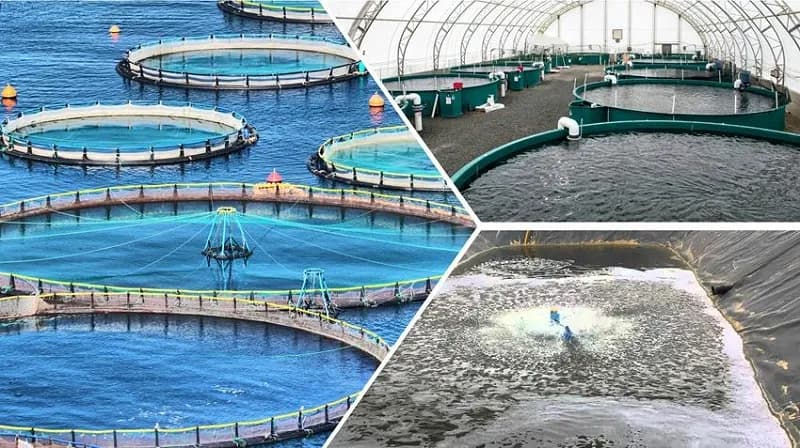
6- Fish Farming in Nile Waters and Floating Cages
Challenges:
According to Article 48 of Law No. 124 of 1983 regulating fisheries and fish farms, establishing farms is prohibited except on uncultivated lands, and they must use only water from nearby lakes or drains; freshwater use is forbidden except for state-run hatcheries.
This leads to diseases in farmed fish because waters contain pesticides and fertilizers, which can affect both fish and humans.
Conflicting positions exist between the Ministry of Irrigation and the Fisheries Authority regarding floating cage aquaculture in the Nile: the Ministry of Irrigation claims it increases pollution, while the Fisheries Authority argues fish purify themselves by feeding on algae.
Agreed Recommendations:
Integrate water management into the economics of fish farming.
Ensure water used for aquaculture is free from harmful sewage or agricultural pollutants.
Assess the negative impact of reusing agricultural wastewater, which reduces water allocated for fish farming.
Develop strategies to ensure sustainable use of agricultural wastewater in aquaculture.
Promote integrated uses of aquaculture water in agriculture, using its natural nutrients to increase productivity and reduce chemical fertilizer use.
Recognize that water productivity in fish farming is higher than in other agricultural activities (plant or animal).
7- Foreign Agricultural Investment and Strategic Partnerships with Water-Rich Countries
Challenges:
Utilizing water-abundant countries’ resources to avoid overuse of Egypt’s scarce water.
Reducing production and market risks while meeting growing domestic demand and building commodity reserves.
Agreed Recommendations:
Cultivate water-intensive crops in water-abundant Nile Basin countries rather than in Egypt.
Import livestock (e.g., meat) from Nile Basin countries due to lack of natural pastures in Egypt.
Encourage private sector investment to capitalize on foreign agricultural opportunities.
Learn from other countries’ strategies to attract foreign investment in agriculture.
Counter the perception in Nile Basin countries that Egypt takes water without contributing.
Utilize media to promote awareness among citizens and private investors.
8- Water Desalination
Challenges:
Desalination is limited in Egypt due to high costs compared to other water sources.
Agreed Recommendations:
Develop technologies for brackish water desalination.
Reuse saline water efficiently.
Enable coastal communities to develop using recycled saline water.
Utilize rainfall and floodwater to enhance national water resources.
Implement cost-recovery strategies for desalination projects.
9- Institutional and Legislative Reform
Challenges:
Multiple agencies share responsibility for water management, causing fragmented authority.
Laws and regulations exist but are inadequately enforced, leading to resource waste and water pollution.
Agreed Recommendations:
Coordinate and integrate strategies across all water-related authorities.
Ensure implementation, monitoring, and evaluation of strategies.
Improve the efficiency and capacity of institutions in water and agriculture sectors.
Reduce fragmentation of responsibilities among agencies.
Include local and global civil society in strategy development.
Ensure accurate information sharing across government entities.
Strengthen roles of the World Water Council and Arab Water Council.
Strengthen roles of the Arab League and African Union.
Avoid purely sectoral approaches; adopt a holistic perspective for integrated water resource management.
Use scientific research and applied studies as guidance for planning and budgeting.
Include Egyptian farmers in water management with adequate inputs, costs, and methods.
Enhance the role of the Agricultural Development and Credit Bank in supporting farmers.
Develop a sustainable approach to water management starting from waste prevention to efficient use.