The Information and Decision Support Center of the Egyptian Cabinet took over A bibliographical bulletin on fisheries resources, including key findings and recommendations for achieving sustainable development in the fisheries sector. Bulletin No. 219, septmper 2024
The fisheries sector is considered the most important sector in the national economy of the Arab Republic of Egypt, with a total annual production of 1.4 million tons.
Over the past twenty years, Egypt has achieved significant success in the field of aquaculture.
This has become essential to bridge the food gap and keep pace with the ever-increasing population. Egypt is the leading country in the Mediterranean basin in aquaculture production and ranks eighth globally in total production.
Fish is a traditional and important component of the Egyptian diet and the primary source of inexpensive animal protein for a growing population.Egypt's aquaculture production currently represents approximately 65% of its total fish production (1.4 million tons), which sustains a consumption of 16.5 kg/year per capita (90 million people).
Egypt's demand for fish is projected to reach 2,500,000 tons by 2030.
This means we need to produce an additional one million tons to meet the growing per capita demand.
The role of fisheries cooperatives in achieving sustainable development
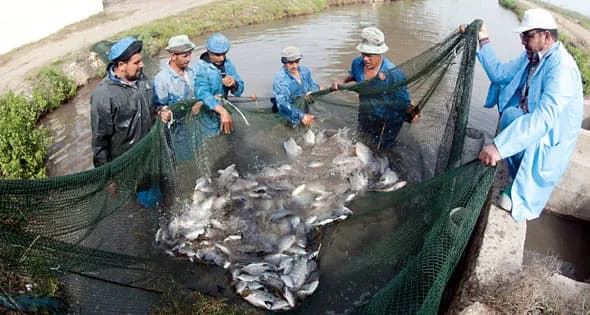
The fisheries cooperative sector is a key driver of fisheries development, as it plays a vital role in utilizing natural water resources, injecting direct investments, creating job opportunities, supporting Egypt’s food security, and significantly reducing fish imports
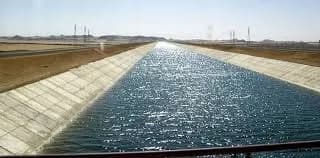
The Toshka project is one of the largest land reclamation projects in Egypt, and it holds great promise for achieving food security and agricultural development outside the Nile Valley. Despite the significant challenges, the potential is also immense. Success depends on financing
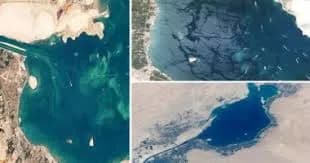
The Bitter Lakes are a group of lakes located in the Suez Canal region, on the eastern side of Egypt, north of the Gulf of Suez.
Approximate coordinates: 30°20′N, 32°23′E. Geologically, before the construction of the Suez Canal, this area consisted of low-lying valleys/salt marshes that were not always filled with water. With the construction of the canal and its connection to the sea/lake, the area began to be covered or reached by water.
The approximate area of the two lakes, as you mentioned, is: the larger lake is about 194 km² (~46,190 acres) and the smaller lake is about 40 km² (~9,525 acres); this is consistent across the sources.
Environmental and Water Characteristics The water in the Bitter Lakes is affected by agricultural runoff from the surrounding lands, some sewage, and also by drainage outlets (drains) into which fresh or treated wastewater flows.
The lakes are also affected by shoreline reclamation and human impacts from tourism activities or nearby construction.
Regarding water quality, at certain times (e.g., August 2016) it was assessed as “good water” as an aquatic environment, in various locations within the Great and Small Bitter Lakes.
The Bitter Lakes are included in the environmental monitoring program carried out by the Egyptian Ministry of Environment, in conjunction with the National Institute of Oceanography and Fisheries, which includes the Bitter Lakes and the Crocodile Lakes among the lakes added to the periodic monitoring program.
Fish Production and Utilization
According to the latest available figures, the total annual fish production of the Bitter Lakes and Lake Timsah is estimated at approximately 5,400 tons.
The Bitter Lakes are considered less diverse compared to lakes in the northern Nile Delta, such as Manzala and Burullus, in terms of aquatic life and the types of species produced.
Opportunities and potential The Marra Lakes have large areas and water that can be improved with good environmental interventions (cleaning, drainage treatment, prevention of encroachments) which may increase productivity.
Lake Bardawil
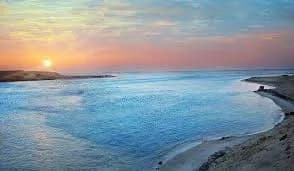
Location and Geography Location and International Classification Bardawil Lake (or Bardawil Salt Flat) is a coastal saline lake/lagoon located on the northern coast of the Sinai Peninsula, separated from the Mediterranean Sea by a narrow sandbar.
It is listed as a Ramsar site for wetlands in Egypt, designated as an ecologically important site.
Official geographic location: approximately 31°05’ N, 33°05’ E according to Ramsar documents.
The declared area of the site in the Ramsar documents is 59,500 hectares (approximately 595 km²) within the protected area.
First: Geographical Location Lake Bardawil is located in the northern Sinai Peninsula, along the Mediterranean Sea.
It stretches along a coastline of approximately 90 kilometers west of the city of El Arish.
It overlooks the Mediterranean Sea, separated from it by a relatively narrow sandy coastal strip (the width of the sand barrier may be less than or around one kilometer at its widest point).
Geography, Dimensions, and Depth
The lake is relatively shallow, with depths ranging from approximately 0.5 meters to 3 meters in its deeper sections. The sandbar separating the lake from the sea varies in width from about 100 meters to approximately 1 kilometer and is sometimes submerged during storms or high tide.
The “Egypt Heritage” document states that the bottom is sandy, and patches of Ruppia spiralis plant are found in some areas.
In recent press sources and articles, it is noted that the total length of the lake is about 90 kilometers, and the width in some areas ranges to about 20-22 kilometers.
It is also mentioned that it is one of the largest saltwater bodies in Egypt, and different estimates may be used in some sources (because some areas are included within the basin or surrounding salt marshes).
Second: Area and Depth Area Approximately 165,000 acres (equivalent to roughly 680 km²)
Depth Relatively shallow – from 30 cm to 3 meters
Lake length: Approximately 90 km Lake width: 15 to 22 km
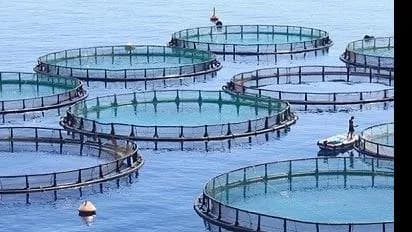
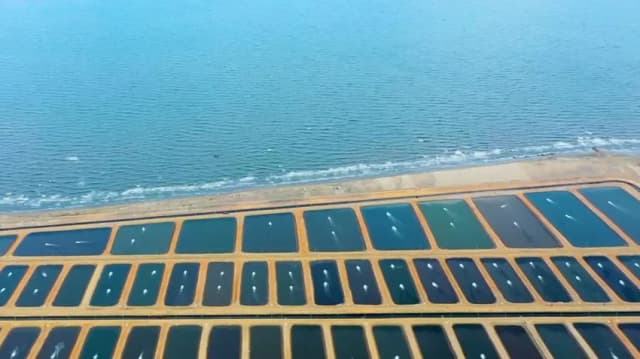
El-Deeba Triangle Fish Farming Project, west of Port Said
Location The El-Deebah Triangle, west of Port Said, facing the sea, on the coast, approximately 14.2 km west of Port Said, and extending up to 600 meters from the shore.
Area The first phase covers approximately 204 acres.
Farming Ponds 72 fish farming ponds dedicated to shrimp farming.
Planned annual production: Shrimp, approximately 250 tons per year.
Facilities: - 4 feed warehouses with a storage capacity of approximately 100 tons. Egyptian Presidency: - Sorting and packing hall with a production capacity of approximately 5 tons per day of fish and shrimp.
Project Phase The first phase, comprising 107 acres and including 61 ponds (shrimp and marine fish), has been fully completed.
Cost The total cost of the first phase is approximately EGP 300 million.
Some derived technical and functional figures: The first phase includes 61 ponds: 41 marine fish ponds with a production capacity of 250 tons per year, and 20 shrimp ponds with a production capacity of 100 tons per year.
Therefore, the total expected production for the first phase is approximately 350 tons/year (marine fish + shrimp) on 107 acres.
A quick economic analysis
Information: Fixed capital for the first phase: £300 million, for a production of approximately 350 tons per year.
This translates to approximately £857,000 per ton of fixed production (300 million ÷ 350 tons) in fixed costs alone—but this does not include operating costs (feed, labor, energy, maintenance), which can be substantial, especially for shrimp.
If we assume that operating costs add, for example, 40-60% of the total cost (depending on density, feed type, and efficiency), then the total cost per ton could be significantly higher.
However, the selling price of fish and shrimp also has a major impact: shrimp typically commands a much higher price than fish, especially if it is of high quality and destined for export or high-end markets.
Likewise, the presence of sorting and packing facilities and the project's proximity to a port or good means of transport contribute to reducing logistical costs.
Lake Mariout
📍Geographical Location:
Located southwest of Alexandria.
Bordered to the north by the districts of Alexandria, and to the south by deserts and agricultural areas.
It once extended as far as the Mediterranean Sea, but is now relatively isolated from it.
The Lake Mariout Fishermen's Cooperative Society is located there.
📏 Area and Depth:
Current Area:
Approximately 10,000 to 15,000 feddans only.
(It was much larger in ancient times, but has shrunk due to urban sprawl and drainage.)
Depth: From 50 cm to 2.5 meters in some areas, decreasing due to siltation and sedimentation.
💧 Water Sources:
Agricultural, sanitary, and industrial wastewater from Alexandria (including the Nubaria Canal, the General Drain, and the Mex Drain).
There is no direct connection to the Mediterranean Sea.
It used to receive Nile water, but now relies heavily on treated wastewater.
🐟 Fish Production and Fish Species: Water Quality: Highly Polluted (Polluted Freshwater or Brackish Water).
Approximate Annual Production: Between 2,000 and 4,000 tons (varying according to season).
Common Fish:
Tilapia Carp (Chinese and Silver) Catfish Mullet (to a lesser extent) Nile Tilapia
📜 Historical Significance:
During the Pharaonic, Ptolemaic, and Roman periods, it was part of a major port serving Alexandria.
Historians mention it as a key water and commercial source.
The potential for improved fish stock management, preventing overfishing, and enforcing strict fishing and fishing regulations to ensure stock sustainability.
Revitalizing organized fishing activities and providing support to fishermen in terms of boats, storage and refrigeration equipment, and fish sorting and export facilities.
The project involves dredging and cleaning the Bitter Lakes, improving water quality, and widening existing inlets to allow for water renewal and the natural entry and exit of fish fry.
With environmental improvements, fish in market demand—especially marine and semi-marine species—can be produced and marketed locally or exported, provided the necessary infrastructure and permits are in place.
Hydrology and Water Resources The water here is primarily saline or brackish, partially connected to or influenced by canal/sea water through exchange or replenishment.
It is affected by: Agricultural runoff from surrounding lands (nutrients, fertilizers, possibly pesticides). Some sewage or treated wastewater enters the lakes or drains where it eventually terminates.
Discharge from outlets/drains – fresh or treated water entering the lake basin → alters the chemical composition or nutrient load.
Water renewal may be limited or uneven depending on the outlets/sills, currents within the lake, or the connection to the canal/sea, making stagnation or reduced renewal a challenge.
Environmental Conditions/Water Quality and Challenges
According to sources, in August 2016, water quality in some areas of the two lakes was assessed as "good" for aquatic life.
However, several environmental pressures exist, including:
Pollution from agricultural runoff, sewage, and drainage systems.
Coastal landfill (construction, tourism expansion, or housing) that impacts the seabed, reducing water areas or altering flows. Sediment accumulation/beach alterations resulting from dredging, encroachment, or hydrological changes.
Changes in salinity, temperature, or oxygen levels (especially in the bottoms) are likely due to poor water renewal or stagnation.
Within the monitoring program: According to the Ministry's official website, the Bitter Lakes were added to the periodic lake monitoring program in 2010–2011.
This program aims to: monitor water and sediment quality, assess the environmental situation, and build a database for lake management..
Biodiversity and Fish Production Fish production in the Bitter Lakes and Lake Timsah is estimated at approximately 5,400 tons annually—as you mentioned.
The biodiversity of the Bitter Lakes is lower than that of some of the larger lakes in the northern Delta (such as Lake Manzala or Lake Burullus) in terms of both productive species and fish populations.
Currently, there is no publicly available, detailed information in open-source sources about all species, microorganisms, or time-related trends in biological activity (e.g., how diversity or sizes have changed over the years) — specialized field studies may be needed.
It can be concluded that due to pressures (pollution, water changes, less renewal), fry or small organisms may be affected, reducing productivity or sustainability.
Proposed Development and Strategic Opportunities
Given the size of the area and the availability of water, development opportunities exist—as you mentioned. The most important areas to focus on are:
Improving water regeneration: Opening or widening existing waterways or creating new water connections/channels to allow for water regeneration and reduce stagnation.
Treatment/purification of drainage before it enters lakes: Agricultural drainage, sewage, and freshwater runoff must be monitored and treated.
Removal/dredging of lakebeds in areas with sediment accumulation to increase depth and improve water exchange.
Establishment of buffer zones or non-encroaching buffers on shorelines to prevent landfilling or unauthorized construction.
Developing fishing infrastructure: boats, refrigeration equipment, fish sorting, marketing, transportation, and linking to local or export markets—while ensuring sustainability in terms of the number and types of fishermen.
Developing the lake as a natural ecotourism attraction: utilizing it as a recreational/fishing tourism area (within a controlled environmental framework) which could attract investment and raise environmental awareness.
From an environmental perspective, improving water quality and biodiversity will contribute to increased production and higher economic returns.
From a regulatory perspective, it is essential to define fishing seasons and net sizes, prevent overfishing, and establish fish stock monitoring/management units.
Third: The Nature of the Lake Its water is saline but not excessively so.
It is separated from the Mediterranean Sea by a sandbar.
It is connected to the sea via three inlets/straits: Inlet 1 (main) Inlet 2 Inlet 3 (recently opened to improve water exchange)
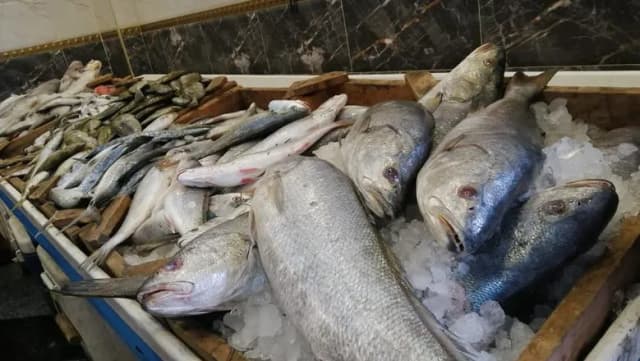
Fourth: Types of fish produced Lake Bardawil is distinguished by the production of high-quality fish that are exported to European and Gulf markets.
Sea bream is among the best types, rich in protein. Sea bass is highly sought after for export. Mullet is of very high quality. Local shrimp is available in good quantities. Eels were available and are gradually returning. Sea bass, grouper, and snapper are available in limited quantities.
All the fish produced are 100% natural, no farming is involved.
Fifth: Fishing in the Lake Fishing in the lake is subject to a strict system regulated by: The Bardawil Lake Development Authority The General Authority for Fish Resources Development Fishing is permitted only during specific seasons, and a biological rest period of at least three months is imposed annually (usually from May to August).
Fishing is carried out using: Environmentally friendly nets Small boats (feluccas) More than 1,200 fishermen work on them during the fishing seasons.
Sixth: Infrastructure and Development
A marine pier was constructed for unloading and transporting fish.
The lake's inlets were developed to improve water renewal.
A modern sorting, packaging, and refrigeration station was established to ensure export quality.
Large quantities of production are exported to:
Italy, France, Greece, and the Gulf States
Seventh: Economic Importance
Annual Production Rivers between 2,000 and 4,000 tons of fish Exports A large percentage is exported fresh or frozen Employment Employs more than 3,000 people directly and indirectly Quality Considered one of the cleanest lakes in Egypt environmentally
Eighth: Challenges Silting in inlets Affects water exchange with the sea Climate change Affects production and species Overfishing out of season Threatens fish stocks Lack of services for fishermen In some remote areas Risk of pollution
Although the lake is considered clean, there are future concerns about human and agricultural pollution. The lake has witnessed a decline in production due to the blockage of fishing inlets and the spread of illegal fishing, which has affected fish stocks and fry.
The dredging and development project for the lake was undertaken to salvage the situation, improve production, facilitate fishing, and allow the lake's natural inlets to open into the sea.
The development work includes upgrading fishing harbors, improving maritime transport and handling, constructing service facilities for fishermen, and building an ice factory near the harbor to reduce waste and facilitate fish preservation.
The developing entity referred to is the “Future of Egypt for Sustainable Development” agency, in coordination with the agriculture, fisheries and governorate authorities.
Ninth: State Efforts to Develop the Lake
Implementing a plan to develop the infrastructure of the lake's inlets.
Establishing a training center for the lake's fishermen.
Studying the feasibility of introducing cage aquaculture in adjacent areas, but not within the lake itself.
Tenth: Environmental Status Lake Bardawil is considered one of the cleanest lakes in Egypt.
It boasts unique biodiversity.
Water quality is regularly monitored by the Ministry of Environment and the General Authority for Fish Resources Development.
It is classified as a natural, unpolluted lake.
The Future of Lake Bardawil:
Expanding cold chain and processing facilities to boost exports.
Developing services for fishermen and improving livelihoods in surrounding areas.
The potential for establishing ecotourism projects and seafood restaurants nearby.
Upgrading the efficiency of small ports and marinas to support fishing operations.
Fish Production and Uses Lake Bardawil is the second largest Egyptian lake after Lake Manzala in terms of area.
Approximately 3,500 fishermen work there, with an estimated 1,200 fishing boats.
Fish species found include sea bream, sea bass, grouper, mullet, shrimp, crab, and others.
Average annual fish production is estimated at around 2,600 tons according to some sources, with projections indicating an increase in production following development.
Research has been conducted to study sea bream production in the "Harfat al-Dabba" area of the lake, where biological data were collected from individuals of varying sizes and weights between April and November.
Water, Quality, and Environment Salinity Level: Average high salinity (approximately 50 parts per thousand), but after development and dredging, it has been reduced to approximately 46 parts per thousand.
The water is considered among the purest in the northern lakes in terms of the absence of pollution related to industrial and agricultural runoff.
However, there is a risk of siltation (the accumulation of silt and sediment) within the inlets and estuaries, which reduces water flow and affects water quality and exchange with the sea.
Detailed figures for the development and expected results: The government estimated that the development would increase annual fish production by approximately 250 tons after the dredging and development work is completed.
Following the development, fish production is expected to increase to approximately 11,000 tons annually in a later phase, provided the facilities are completed and support for fry breeding and distribution is provided.
The number of fishermen who will benefit from the development is estimated at approximately 3,000–5,000, according to the source.